Production Line Automation: A Step-by-Step Implementation Guide
Implementing production line automation from the ground up requires more than just purchasing robotic arms and sensors. Manufacturing engineers face a complex ecosystem of IIoT devices, manufacturing execution systems, and process integration challenges that can derail even well-funded digital transformation initiatives. This comprehensive guide walks you through the proven methodology that companies like Siemens and Rockwell Automation use to transition from manual or semi-automated production environments to fully integrated smart factory systems. Whether you're optimizing a single assembly line or reimagining an entire plant floor, the principles outlined here will help you avoid costly mistakes while maximizing OEE from day one.
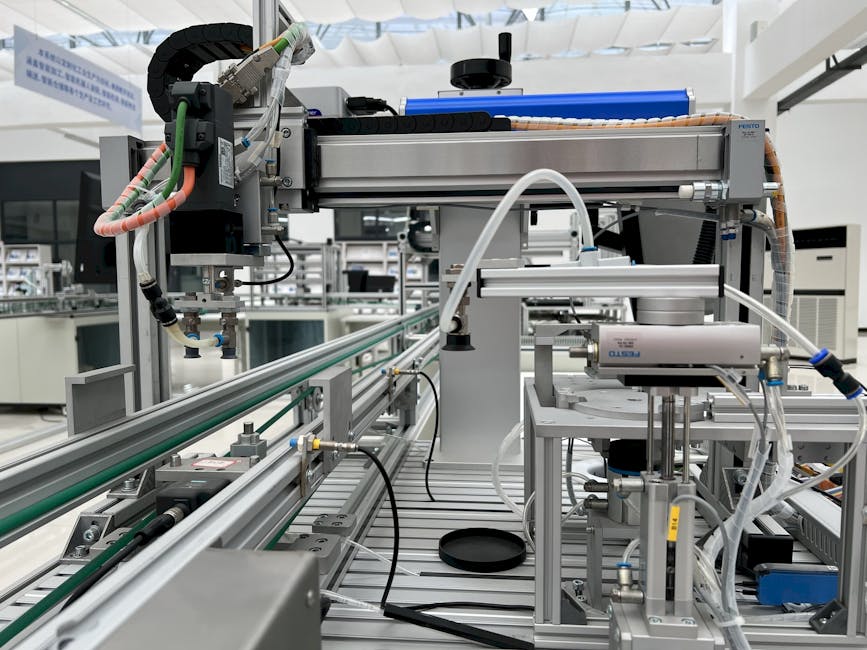
Before diving into equipment selection or vendor negotiations, successful Production Line Automation begins with a thorough baseline assessment of your current manufacturing operations. Document your existing production throughput, cycle times, defect rates, and downtime incidents across at least three months of historical data. This baseline becomes your north star for measuring ROI and identifying which processes will benefit most from automation investment. Many organizations rush into robotics deployment without understanding their actual bottlenecks, only to discover that their constraint lies in order fulfillment routing or inventory management automation rather than physical assembly tasks.
Phase One: Process Mapping and Automation Readiness
Start by creating detailed process maps for each production line segment you intend to automate. Use process mining tools to capture the actual workflow, not the idealized procedures documented in your standard operating procedures. Walk the floor with production supervisors and line operators to identify manual handoffs, quality inspection points, material staging areas, and exception handling procedures that occur in practice. Your goal is to understand the true sequence of operations, including the informal workarounds that experienced operators use to maintain throughput when problems arise.
Next, conduct an automation readiness audit focusing on three critical dimensions: technical infrastructure, workforce capability, and process standardization. On the technical side, assess your current network infrastructure, data collection systems, and enterprise software integration points. Smart factory integration demands robust connectivity between edge devices, manufacturing execution systems, and ERP platforms. Document every legacy system that will need to interface with new automation equipment. For workforce capability, inventory the skills your maintenance technicians and production engineers currently possess versus what they'll need to program, troubleshoot, and optimize automated systems. Finally, evaluate process standardization—automation thrives on repeatability, so any production line with high variability in setup, tooling, or procedures will require standardization work before automation can deliver consistent results.
Phase Two: Equipment Selection and System Architecture
With your baseline data and readiness assessment complete, you can now make informed decisions about automation equipment and system architecture. Rather than selecting equipment based solely on technical specifications or vendor relationships, map each automation component to specific process improvements you documented in phase one. If your primary constraint is cycle time reduction in assembly operations, industrial robotics with collaborative features may be appropriate. If quality control consistency is the issue, invest in smart sensors and machine vision systems integrated with real-time quality control feedback loops.
Design your system architecture around flexibility and scalability from the outset. Companies like ABB and Fanuc have learned that rigid, proprietary automation systems become liabilities as production requirements evolve. Specify open communication protocols, modular equipment configurations, and standardized interfaces that allow you to swap vendors or add capabilities without wholesale system replacements. Pay particular attention to your data architecture—production line automation generates massive volumes of sensor data, machine state information, and quality metrics that must flow seamlessly into analytics platforms for predictive maintenance and process optimization.
Integration Planning
Create a detailed integration plan that addresses how new automation equipment will communicate with existing systems. This includes PLC programming standards, OPC UA server configurations, database schema for manufacturing data, and API specifications for connecting manufacturing execution systems with enterprise software. Many automation projects stumble during integration because teams underestimate the complexity of making disparate systems work together reliably. Budget adequate time and specialist resources for integration work—it typically consumes 30-40% of total project effort in complex production environments.
Phase Three: Pilot Implementation and Validation
Never attempt full-scale production line automation as your first implementation. Instead, select a representative section of your production line as a pilot that's large enough to demonstrate real value but contained enough to manage risk. The pilot should include complete end-to-end functionality: material handling, processing or assembly operations, quality inspection, and data integration with upstream and downstream systems. This approach allows you to validate technical assumptions, train your workforce on new equipment, and refine operational procedures before committing to broader rollout.
During pilot implementation, instrument everything with metrics collection. Track not just production output and quality metrics, but also system availability, mean time between failures, operator intervention frequency, and data accuracy. These operational metrics will reveal whether your automation solution is truly ready for production scale or requires further refinement. Run the pilot for a minimum of 30 days under normal production conditions, including shift changes, material variations, and typical production disruptions. The goal is to stress-test the system and discover failure modes before they impact your entire production capacity.
Leverage AI development platforms to build machine learning models that optimize your newly automated processes. These systems can identify patterns in production data that human operators miss, enabling predictive maintenance scheduling, adaptive process adjustments, and continuous OEE improvements that compound over time.
Phase Four: Workforce Training and Change Management
Technical implementation is only half the battle in production line automation. The human dimension determines whether your automation investment delivers sustained value or becomes an expensive source of frustration. Develop a comprehensive training program that goes beyond basic equipment operation to build genuine technical competence. Your maintenance technicians need to understand sensor calibration, PLC troubleshooting, and robotic programming. Production engineers require skills in data analysis, process optimization, and manufacturing execution system configuration. Line operators must learn new quality control procedures, exception handling protocols, and how to interpret data dashboards that guide their decisions.
Structure your training around hands-on practice with actual equipment in controlled scenarios. Simulated failures, material variations, and production disruptions allow workers to build problem-solving skills without risking production output. Create tiered competency levels with clear progression paths, and recognize workers who develop advanced automation skills with compensation adjustments or expanded responsibilities. This investment in workforce development pays dividends in system uptime and continuous improvement participation.
Phase Five: Full Rollout and Continuous Optimization
With a validated pilot and trained workforce, you're ready for full production line automation rollout. Execute the rollout in phases, bringing new equipment online during planned downtime or low-volume periods to minimize production disruption. Maintain parallel operations where feasible, keeping manual backup procedures available until automated systems prove themselves under full production loads. This parallel approach provides insurance against unforeseen issues while building organizational confidence in the new systems.
Post-rollout, shift your focus to continuous optimization. Production line automation isn't a set-it-and-forget-it investment—it's a platform for ongoing improvement. Use the rich data streams from smart sensors and manufacturing execution systems to identify optimization opportunities. Machine learning algorithms can suggest process parameter adjustments that improve quality or reduce cycle times. Digital twin modeling allows you to simulate production scenarios and test improvements virtually before implementing them on the floor. Establish regular review cycles where production engineers, maintenance technicians, and data analysts collaborate to identify and implement incremental improvements.
Measuring Success
Define clear success metrics aligned with your original baseline assessment. Track OEE improvements broken down into availability, performance, and quality components. Monitor production costs per unit, including both direct costs and overhead allocation. Measure lead time reductions in order fulfillment cycles. Calculate defect rates and scrap costs. Most importantly, track these metrics over time to demonstrate sustained improvements rather than temporary gains. Companies that excel at production line automation view it as a journey of continuous enhancement rather than a one-time project with a fixed endpoint.
Advanced Considerations: Supply Chain Integration
As your production line automation matures, extend integration upstream and downstream into supply chain operations. Automated production lines generate precise demand signals for raw materials and components, enabling just-in-time inventory management that reduces working capital requirements. Real-time production data can trigger automatic reorder points, optimize inventory levels, and enable cross-docking operations that bypass traditional warehousing. Smart factory integration creates opportunities for supply chain optimization that were impossible in manual production environments.
Partner with suppliers who can respond to automated demand signals with automated fulfillment. The most advanced manufacturing operations achieve supply chain synchronization where raw material deliveries align precisely with production schedules, eliminating buffer inventory while maintaining high line availability. This level of integration requires data sharing agreements, standardized communication protocols, and collaborative planning with key suppliers. The payoff comes in reduced inventory carrying costs, improved cash flow, and greater agility in responding to demand fluctuations.
Conclusion
Successful production line automation implementation follows a disciplined methodology that balances technical excellence with organizational change management. By starting with thorough baseline assessment, selecting equipment strategically, validating through pilot programs, investing in workforce development, and committing to continuous optimization, manufacturing organizations can achieve the productivity gains and quality improvements that automation promises. The companies that excel in this domain treat automation as a capability to be developed over time rather than a technology to be purchased and installed. As you embark on your automation journey, remember that Intelligent Automation Solutions extend far beyond the factory floor, creating opportunities to transform every aspect of manufacturing operations from production scheduling to predictive maintenance to supply chain coordination. The step-by-step approach outlined here provides the foundation for achieving those transformative outcomes while managing implementation risk and building organizational capabilities that compound over time.
Comments
Post a Comment