Intelligent Automation Best Practices for Manufacturing Excellence
Manufacturing facilities that have moved beyond pilot projects into full-scale intelligent automation deployments face a distinct set of challenges—not whether these systems work, but how to extract maximum value from increasingly sophisticated technology investments. As someone who has implemented these platforms across multiple production environments, I've observed that the difference between adequate results and truly exceptional outcomes often comes down to operational discipline, strategic integration approaches, and continuous optimization practices rather than the underlying technology itself.
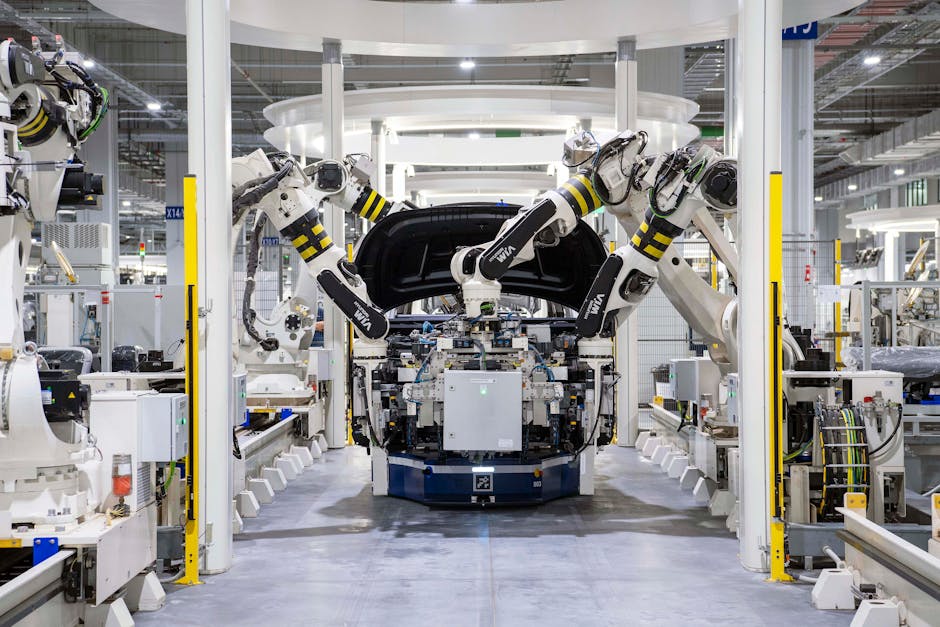
The maturity curve for Intelligent Automation implementations typically reveals a pattern: initial deployments deliver impressive gains simply by addressing the most obvious inefficiencies, but sustaining improvement momentum requires progressively more sophisticated approaches to system integration, data utilization, and process optimization. Organizations that treat these platforms as static installations rather than continuously evolving ecosystems see performance plateau within 12-18 months, while those applying rigorous optimization practices realize compounding benefits that accelerate over time.
Strategic Architecture Decisions for Enterprise-Scale Deployments
When scaling Intelligent Automation beyond individual production lines to facility-wide or multi-site implementations, architectural choices made early determine long-term flexibility and performance. The centralized versus distributed intelligence question deserves particular attention. Pure cloud-based architectures offer powerful analytics capabilities and simplified infrastructure management but introduce latency that becomes problematic for real-time process control applications where millisecond-level responses matter. Purely edge-based approaches provide the necessary speed but limit the sophisticated cross-facility analytics that drive strategic optimization.
The most effective enterprise architectures implement a hybrid approach: edge devices handle time-critical process control and equipment monitoring, while hierarchical processing layers aggregate and analyze data at progressively higher levels—line controllers synthesizing information from multiple work cells, facility systems integrating across production lines, and enterprise platforms identifying patterns across geographic locations. This tiered intelligence architecture mirrors the decision-making structures in effective manufacturing organizations, placing authority at the appropriate level for each type of decision.
Integration with Existing Manufacturing Systems
Smart Factory Systems deliver maximum value when deeply integrated with MES platforms, ERP systems, PLM tools, and supply chain management applications rather than operating as isolated islands. This integration enables closed-loop optimization where intelligent systems don't just monitor and control production equipment but also influence upstream decisions about production scheduling, raw material procurement, and engineering change orders. When your Predictive Maintenance system identifies degrading performance in a critical asset, integrated architectures can automatically trigger production schedule adjustments, expedite spare parts orders, and alert suppliers about potential delivery impacts—all without manual intervention.
API design becomes critical at this integration layer. Establish standardized data exchange protocols that remain consistent even as underlying systems evolve. Document these interfaces thoroughly and version them properly to prevent the integration fragility that often emerges as different systems receive independent updates. Companies like ABB and Siemens have published integration frameworks specifically designed for manufacturing environments that provide proven patterns for these critical system interconnections.
Advanced Optimization Techniques for Intelligent Automation
Once fundamental systems are operating reliably, attention shifts toward optimization strategies that extract incremental gains from increasingly sophisticated analyses. Multi-objective optimization represents a powerful but underutilized approach. Traditional automation optimizes for single objectives—maximize throughput, minimize energy consumption, reduce changeover time. Intelligent systems can simultaneously balance multiple competing objectives, finding optimal solutions that deliver the best overall outcome even when individual metrics don't reach theoretical maximums.
Consider changeover management as an example. Minimizing changeover time alone might dictate aggressive parameter changes that stress equipment and increase maintenance requirements. Optimizing for equipment longevity might suggest gradual transitions that extend downtime unnecessarily. Intelligent Automation platforms can identify changeover profiles that minimize total cost by considering time, equipment wear, startup scrap, and energy consumption simultaneously, finding solutions that human operators would struggle to calculate manually even with extensive experience.
Leveraging Digital Twin Technology
Digital twin implementations—virtual replicas of physical production systems that mirror real-time conditions and enable what-if scenario testing—represent the frontier of intelligent automation capabilities. Rather than testing process changes on live production lines with the attendant risks and disruption, engineers can evaluate modifications in the digital environment, predicting outcomes with remarkable accuracy before implementing anything physically. This capability transforms how we approach process improvement, enabling rapid experimentation that would be impractical or impossible in traditional environments.
Building effective digital twins requires comprehensive custom AI development that accurately models the complex physics, chemistry, and thermodynamics governing your specific processes. Generic models rarely capture the nuances that determine real-world performance. Partner with specialists who have deep domain expertise in your particular manufacturing processes—injection molding, CNC machining, chemical processing, or whatever operations define your production environment.
Data Strategy and Analytics Best Practices
The volume of data generated by comprehensive IIoT Integration can overwhelm organizations lacking disciplined data management practices. Establish clear data retention policies that balance analytical value against storage costs. High-frequency sensor data from every piece of equipment quickly accumulates to petabytes, yet much of this information becomes redundant after initial pattern learning. Implement tiered storage strategies that retain full-resolution data during critical periods while compressing or summarizing historical information once patterns are established.
Feature engineering—the process of transforming raw sensor readings into meaningful analytical variables—often determines model performance more than algorithm selection. Rather than feeding raw temperature, pressure, and vibration readings directly into machine learning models, derive features that capture the relationships and patterns domain experts recognize as significant. Bearing vibration frequency ratios, temperature differential rates of change, and pressure stability metrics often prove far more predictive than the underlying raw measurements.
Model Performance Monitoring and Retraining
Machine learning models degrade over time as production conditions drift from the data used during initial training. Equipment ages, product mixes shift, seasonal variations affect environmental conditions, and supply chain changes introduce raw material variations. Without active monitoring and periodic retraining, models that initially performed exceptionally gradually lose accuracy until they become unreliable.
Implement automated model performance monitoring that compares predictions against actual outcomes, flagging degradation before it impacts operations. Establish retraining schedules based on performance metrics rather than arbitrary time intervals—some models remain accurate for months while others require weekly updates depending on process stability. Maintain versioned model repositories with comprehensive documentation of training data, parameters, and performance benchmarks so you can trace any issues and roll back to previous versions if necessary.
Organizational Capabilities and Change Management
Technology sophistication means little without the organizational capabilities to utilize it effectively. Successful intelligent automation programs invest heavily in developing internal expertise rather than remaining perpetually dependent on external consultants and vendors. Establish centers of excellence that combine domain experts from production, maintenance, quality, and engineering with data scientists and automation specialists. This cross-functional structure ensures technical capabilities remain grounded in operational realities while manufacturing expertise benefits from advanced analytical approaches.
Create career pathways that allow skilled operators and technicians to transition into intelligent automation roles without requiring complete career restarts. Certification programs in industrial data analytics, sensor technology, and system troubleshooting provide structured development paths. Companies like Rockwell Automation and Honeywell offer industry-recognized credentials specifically designed for manufacturing professionals. Investing in your workforce's evolution demonstrates commitment to their long-term value while building the internal capabilities critical for sustained success.
Governance and Decision Rights
As intelligent systems assume greater operational authority, establishing clear governance frameworks becomes essential. Define explicitly which decisions systems can make autonomously, which require human confirmation, and which remain entirely human-controlled. These boundaries shift over time as confidence in system performance grows, but they should always be deliberate and documented rather than emerging organically through practice.
Implement override protocols that allow operators to countermand system decisions when their experience suggests alternative approaches. Treat these overrides as valuable learning opportunities rather than system failures—investigate why the human operator's assessment differed from the algorithmic recommendation, incorporate those insights into model refinement, and document the reasoning for future reference. The goal isn't eliminating human judgment but rather creating effective human-machine collaboration where each contributes their unique strengths.
ROI Maximization and Continuous Value Creation
Measuring return on intelligent automation investments requires looking beyond direct operational metrics to capture broader business impacts. Improved OEE and reduced downtime deliver obvious value, but intelligent systems also enable strategic capabilities that are harder to quantify but equally valuable. The ability to reliably commit to aggressive delivery timelines because you have confidence in production stability, the capacity to accept smaller batch orders economically because changeover efficiency has improved dramatically, the competitive advantage of offering customization options that were previously impractical—these strategic benefits often exceed the direct operational savings.
Develop value realization frameworks that track both tangible and strategic benefits. Include metrics around customer satisfaction, market share growth in specific segments, and new business opportunities enabled by enhanced capabilities. Present these comprehensive assessments to executive leadership quarterly, demonstrating how Manufacturing AI Solutions function not just as cost reduction tools but as strategic enablers of business growth and competitive differentiation.
Conclusion
For manufacturing organizations that have committed to intelligent automation as a core operational capability, excellence emerges from disciplined execution of proven practices rather than simply deploying the latest technologies. The architectural decisions that ensure scalability, the integration approaches that maximize system synergies, the data strategies that maintain analytical quality, and the organizational capabilities that translate technical potential into operational reality—these factors separate leaders from followers in the smart manufacturing landscape. As these technologies continue evolving and competitors accelerate their adoption, the manufacturers who will maintain advantage are those treating intelligent automation not as a project with a completion date but as a continuous journey of optimization and improvement. The combination of sophisticated Manufacturing AI Solutions with operational discipline and strategic thinking creates production environments that not only meet today's demands but adapt continuously to whatever challenges tomorrow brings. The competitive dynamics of modern manufacturing leave little room for complacency—excellence in intelligent automation execution has become a fundamental requirement for sustained success.


Comments
Post a Comment