AI Banking Transformation: Ultimate Resource Guide for Wholesale Banking
The wholesale banking sector stands at a critical inflection point where artificial intelligence is no longer optional—it is foundational to remaining competitive in capital markets operations, trade finance, and corporate lending. As someone deeply embedded in CIB operations at institutions managing billions in RWA, I have curated this comprehensive resource guide to help treasury managers, credit risk officers, and compliance teams navigate the expanding ecosystem of AI tools, frameworks, communities, and literature that are actively reshaping how we execute KYC procedures, optimize capital allocation, and manage collateral across global portfolios.
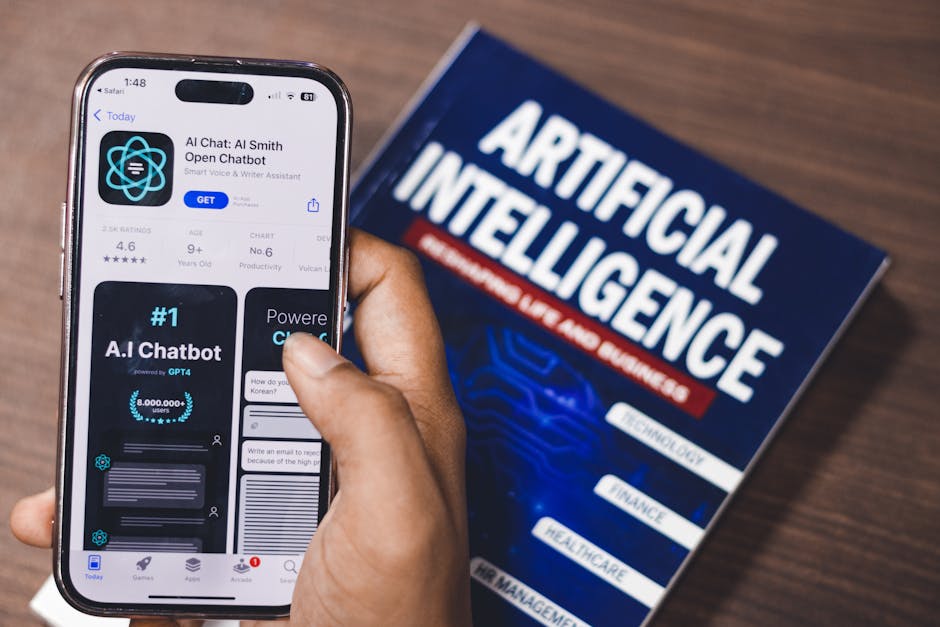
Whether you are leading a fraud detection initiative at a bulge bracket firm or optimizing loan underwriting workflows at a regional corporate bank, understanding the landscape of AI Banking Transformation resources is essential. This guide organizes the most valuable tools, platforms, and knowledge sources into actionable categories that align with the specific functions wholesale banking practitioners manage daily—from transaction reconciliation to financial statement analysis.
AI Platforms and Tools for Core Banking Functions
The technology stack supporting AI Banking Transformation has matured significantly, with specialized platforms now addressing the unique requirements of wholesale banking operations. For credit risk assessment and decisioning workflows, platforms like Quantexa and Ayasdi provide graph analytics and topological data analysis that surface hidden relationships in client networks—capabilities that proved essential during recent stress testing cycles where traditional models underestimated correlated exposures.
In trade finance automation, solutions such as TradeIX and Contour leverage distributed ledger technology combined with machine learning to reduce letter of credit processing times from days to hours. Goldman Sachs' Marcus platform demonstrates how AI-driven portfolio management tools can optimize risk-adjusted returns across diverse asset classes, while JPMorgan Chase's COiN platform has become the industry benchmark for contract intelligence, extracting key terms from loan agreements with accuracy rates exceeding 95 percent.
- Fraud Detection: Feedzai, FICO Falcon Fraud Manager, SAS Fraud Management—specialized for real-time transaction monitoring with false positive rates below 2 percent
- Compliance Monitoring: ComplyAdvantage, Actimize, NICE Actimize—AML and sanctions screening with natural language processing capabilities
- Client Onboarding: Trulioo, Onfido, Jumio—digital KYC platforms integrating biometric verification and document authentication
- Treasury Management: Kyriba AI, GTreasury Intelligence, Finastra Fusion—liquidity forecasting and cash positioning optimization
- Capital Markets Operations: SimCorp, Bloomberg Terminal with AI functions, Refinitiv Eikon—real-time risk analytics and scenario modeling
Essential Frameworks and Methodologies
Implementing AI Banking Transformation requires more than technology—it demands structured frameworks that align with regulatory expectations and risk management principles. The Bank for International Settlements' Principles for the Sound Management of Operational Risk provides foundational guidance that wholesale banks must integrate when deploying AI in credit decisioning or collateral management workflows.
The Financial Stability Board's framework on AI and machine learning in financial services outlines governance structures that institutions like Barclays and BNP Paribas have adopted to ensure model explainability—particularly critical when AI influences lending decisions subject to fair lending regulations. For risk modeling specifically, the Fundamental Review of the Trading Book (FRTB) framework necessitates AI approaches that calculate Value-at-Risk and Earnings at Risk with sufficient granularity to meet daily risk reporting requirements.
Organizations seeking to build custom AI capabilities should explore enterprise AI development platforms that provide governance layers and compliance controls designed for regulated financial institutions. The CRISP-DM methodology adapted for banking—covering business understanding through deployment—remains the most widely adopted approach for structuring AI projects from initial fraud detection pilot through enterprise-wide rollout.
Academic Research and Industry Publications
Staying current with AI Banking Transformation research is non-negotiable for risk officers and product heads making strategic technology investments. The Journal of Financial Data Science publishes peer-reviewed research on machine learning applications in portfolio optimization and asset valuation—recent issues have featured studies on using transformer models for credit spread prediction that outperform traditional econometric approaches by 18 percent in out-of-sample testing.
The Federal Reserve Bank of New York's staff reports regularly analyze AI adoption in banking, with particularly insightful work on how machine learning impacts loan pricing dynamics and NPL forecasting accuracy. For practitioners focused on Corporate Banking AI applications, the Harvard Business Review's series on AI in financial services provides case studies from Citigroup's transformation of commercial banking relationship management through predictive analytics.
- Essential Reading: "Artificial Intelligence in Finance" by Yves Hilpisch—comprehensive Python implementations for algorithmic trading and risk management
- "Machine Learning for Asset Managers" by Marcos López de Prado—advanced techniques for portfolio construction and risk parity strategies
- "Credit Risk Analytics" by Bart Baesens—covers machine learning models for credit scoring and loan default prediction
- Annual Reports: Oliver Wyman's State of the Financial Services Industry, McKinsey's Global Banking Annual Review—track AI adoption metrics and ROE impacts
Professional Communities and Networks
The most valuable insights on AI Banking Transformation often emerge from practitioner communities where CIB professionals share implementation experiences and navigate regulatory challenges together. The Risk Management Association's AI in Banking working group convenes quarterly with participants from top-tier institutions discussing real-world deployment issues—from managing model drift in credit risk engines to explaining AI decisions to regulators during examinations.
LinkedIn groups such as "AI in Banking & Finance" and "Wholesale Banking Technology" host active discussions on Trade Finance Automation challenges and regulatory technology solutions. The Association for Financial Professionals offers webinars and certification programs focused specifically on AI applications in treasury management and liquidity risk—content developed by practitioners managing multi-billion dollar treasury operations.
For hands-on learning, the CFA Institute's Certificate in Data Science for Investment Professionals provides rigorous training in machine learning techniques applicable to financial advisory services and portfolio management. Conferences like Finovate, Money20/20, and the AI in Finance Summit facilitate networking with technology vendors and fellow banking executives wrestling with similar transformation challenges around client onboarding efficiency and operational risk reduction.
Open Source Tools and Development Resources
Building internal AI capabilities requires access to robust open-source libraries and development frameworks. The Python ecosystem dominates AI Banking Transformation development, with libraries like scikit-learn for traditional machine learning, TensorFlow and PyTorch for deep learning, and specialized packages like pyfolio for portfolio analytics and zipline for backtesting trading strategies.
For Risk Analytics Intelligence specifically, the R ecosystem offers unmatched statistical rigor through packages like PerformanceAnalytics, quantmod, and rugarch for volatility modeling. Financial institutions serious about responsible AI deployment should implement MLflow for experiment tracking and model versioning, ensuring auditability when regulators question how a particular credit decision was reached or why a fraud alert was generated.
- Data Processing: Pandas, Dask, Vaex—handling large-scale transaction datasets for reconciliation and analysis
- Time Series Analysis: Prophet, statsmodels, pmdarima—forecasting liquidity needs and market volatility
- Natural Language Processing: spaCy, Hugging Face Transformers—extracting insights from loan documentation and financial statements
- Explainability: SHAP, LIME, InterpretML—critical for meeting model risk management requirements
- Feature Engineering: Featuretools, tsfresh—automating variable creation for credit models and fraud detection
Regulatory Guidance and Compliance Resources
AI Banking Transformation must occur within strict regulatory boundaries that vary by jurisdiction but universally emphasize explainability, fairness, and risk management. The Office of the Comptroller of the Currency's Bulletin 2023-17 on Model Risk Management provides explicit guidance on validating AI models used in credit decisioning—requirements that directly impact how we structure validation frameworks for loan underwriting algorithms.
The European Banking Authority's guidelines on outsourcing arrangements apply when banks leverage cloud-based AI services for compliance monitoring or financial statement analysis. Practitioners should regularly review the Financial Crimes Enforcement Network's advisories on AI in AML programs, as these directly influence how we configure transaction monitoring systems and calibrate alert thresholds to balance fraud detection with operational efficiency.
The Basel Committee on Banking Supervision's consultative documents on operational resilience increasingly address AI system dependencies—considerations that treasury managers must factor into business continuity planning when critical functions like collateral management or capital allocation rely on machine learning systems. Understanding these regulatory frameworks is non-negotiable for wholesale banking executives championing AI initiatives while maintaining examiner confidence and avoiding enforcement actions.
Vendor Evaluation and Selection Criteria
With hundreds of vendors claiming AI capabilities, wholesale banks need rigorous evaluation frameworks to separate genuinely transformative solutions from repackaged statistical tools. Any platform supporting AI Banking Transformation in regulated functions must demonstrate SOC 2 Type II compliance at minimum, with additional certifications like ISO 27001 for information security management and evidence of successful regulatory examinations at comparable institutions.
For credit risk assessment tools, demand validation evidence showing performance across full credit cycles including stress periods—vendors should provide back-testing results on actual loan portfolios demonstrating predictive lift over existing models measured in basis points of reduction in charge-off rates. Trade Finance Automation platforms must integrate seamlessly with SWIFT messaging and core banking systems while supporting the specific documentary requirements of standby letters of credit, bank guarantees, and trade loans.
Explainability capabilities warrant particular scrutiny: can the system produce human-readable explanations for individual credit decisions that would satisfy a fair lending examination? Does the fraud detection platform provide case management tools that investigators actually use, or do alerts simply create work without context? These practical considerations determine whether AI implementations deliver measurable ROE improvements or become expensive distractions from core banking activities.
Training Programs and Skill Development
Building organizational capability for AI Banking Transformation requires comprehensive training across technical staff, business users, and senior leadership. Coursera's Machine Learning Specialization by Andrew Ng remains the gold standard introduction, while the Deep Learning Specialization provides advanced techniques applicable to time series forecasting in treasury management and pattern recognition in fraud detection.
For banking-specific applications, the New York Institute of Finance offers courses on AI in Risk Management and Machine Learning for Trading that translate academic concepts into practical implementations. Internal training programs should cover not just model development but also model risk management principles—how to validate AI systems, document assumptions, monitor performance, and manage model drift over time as market conditions evolve and client behaviors shift.
Leadership education is equally critical: executives approving multi-million dollar AI investments must understand fundamental concepts like overfitting, training data bias, and the limitations of correlation-based predictions. Executive education programs at MIT Sloan, Columbia Business School, and London Business School now offer condensed AI strategy courses designed specifically for financial services executives navigating digital transformation while managing regulatory relationships and shareholder expectations.
Conclusion
The resources outlined in this guide represent the essential toolkit for wholesale banking professionals driving AI Banking Transformation across credit risk assessment, treasury management, trade finance, and compliance functions. Success requires more than technology adoption—it demands continuous learning, engagement with practitioner communities, and rigorous evaluation of vendor capabilities against real-world banking workflows. As AI systems increasingly influence capital allocation decisions, loan pricing, and risk limit management, the institutions that invest in building deep internal expertise while leveraging best-in-class external tools will capture disproportionate advantages in ROE, operational efficiency, and client satisfaction. For banks ready to move beyond pilot projects into enterprise-wide deployment, exploring comprehensive platforms like Autonomous Data Agents can accelerate transformation by providing the intelligent automation layer that connects siloed systems and surfaces actionable insights across treasury, credit, and capital markets operations.


Comments
Post a Comment