How Global Logistics Firm Transformed Operations Through AI Project Management
When TransGlobal Logistics faced mounting pressure from competitors leveraging advanced analytics and automation, the company's executive team recognized that incremental improvements would no longer suffice. Their manual processes for route optimization, demand forecasting, and warehouse management were consuming excessive resources while delivering suboptimal results. Customer satisfaction scores had plateaued at 73%, well below the industry-leading 85% benchmark, and operational costs per shipment were 18% higher than primary competitors. The decision to pursue comprehensive AI transformation would test whether a traditional logistics company could successfully navigate the complexities of large-scale artificial intelligence implementation.
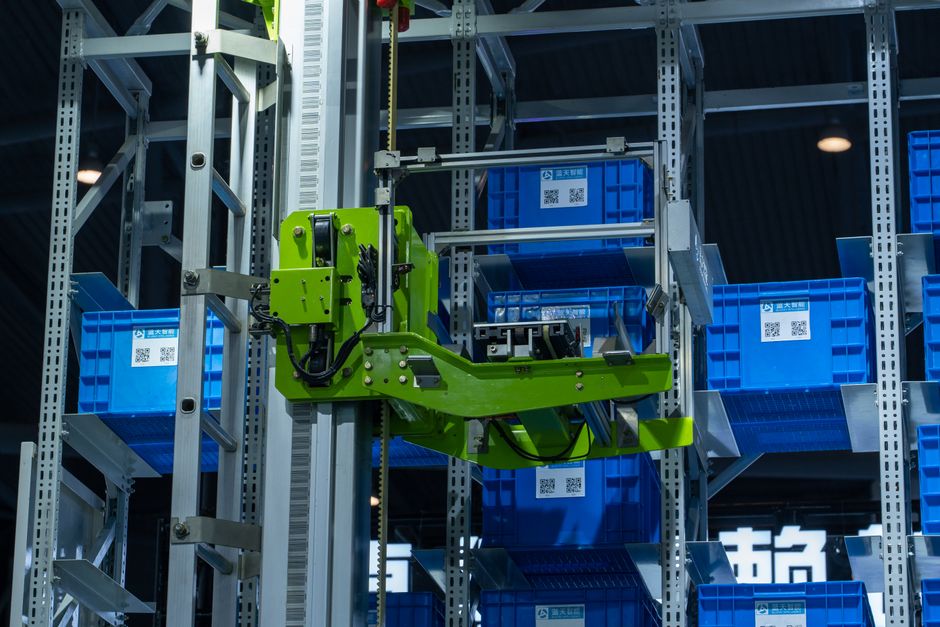
The eighteen-month journey that followed offers valuable insights into the realities of AI Project Management at enterprise scale, complete with the setbacks, pivots, and hard-won victories that characterize genuine transformation efforts. TransGlobal's experience demonstrates both the substantial rewards available to organizations that execute AI projects effectively and the specific practices that separate successful implementations from costly failures. Their case provides a detailed roadmap for similar enterprises contemplating AI adoption.
Initial Assessment and Strategic Planning
TransGlobal began with a comprehensive three-month assessment phase led by their newly formed AI Strategy Council, comprising the CTO, COO, VP of Data and Analytics, and external AI consultants. This team conducted extensive stakeholder interviews across seventeen regional offices, analyzed data infrastructure capabilities, and evaluated twenty-three potential AI use cases based on business impact, technical feasibility, and strategic alignment. The assessment revealed sobering realities about the company's readiness.
Despite operating sophisticated warehouse management and transportation systems, TransGlobal's data existed in fragmented silos with inconsistent formats, naming conventions, and quality standards. Historical shipment data dating back twelve years resided in three incompatible database systems, with no unified customer identifiers linking records across platforms. Real-time tracking data from IoT sensors in trucks and warehouses had been collected for three years but never systematically analyzed due to its massive volume and semi-structured format. Customer feedback existed primarily in unstructured text from emails and call center notes.
Rather than attempting a comprehensive overhaul, the Strategy Council selected three pilot projects for initial implementation, ranked by their potential to deliver measurable value within nine months while building organizational AI capabilities:
- Dynamic route optimization for the company's fleet of 2,400 delivery trucks, targeting 12% reduction in fuel costs and 15% improvement in on-time delivery rates
- Demand forecasting for warehouse inventory management, aiming to reduce carrying costs by 20% while decreasing stockouts by 30%
- Automated customer inquiry classification and routing, designed to reduce call center response times by 40% and improve first-contact resolution rates from 64% to 80%
Each pilot received dedicated cross-functional teams, independent budgets averaging $1.2 million, and executive sponsors who committed to weekly progress reviews. This structure established clear accountability while allowing teams to operate with appropriate autonomy.
Building the Foundation: Data Infrastructure and Team Assembly
Before any model development could begin, TransGlobal invested heavily in data infrastructure modernization. The company engaged a specialized data engineering firm to design and implement a cloud-based data lake that could ingest, standardize, and serve data from all existing systems. This four-month effort cost $3.8 million but proved essential for subsequent AI work, creating a unified environment where data scientists could access clean, consistent data without navigating legacy system complexities.
Simultaneously, TransGlobal assembled AI project teams through a combination of selective hiring and internal upskilling. The company recruited eight experienced data scientists from technology firms and e-commerce companies, deliberately selecting candidates with prior experience in logistics, supply chain, or related operational domains. These hires were paired with fifteen internal domain experts who understood TransGlobal's business processes intimately but lacked AI technical skills. The company invested $450,000 in intensive training programs that taught domain experts fundamental machine learning concepts while immersing data scientists in logistics operations through week-long rotations in warehouses and delivery centers.
This blended team structure proved instrumental in avoiding common pitfalls. Data scientists proposed technically sophisticated approaches that domain experts recognized as impractical given real-world constraints, prompting productive discussions that led to better solutions. Conversely, domain experts suggested simplistic rule-based systems for problems where machine learning could deliver substantially superior results, with data scientists articulating the value of more advanced approaches. The collaborative dynamic ensured that AI Integration Strategies remained grounded in operational reality while pushing beyond incremental improvements.
Route Optimization: Technical Development and Initial Setbacks
The route optimization team began with seemingly straightforward objectives: build models that considered traffic patterns, delivery time windows, vehicle capacity constraints, driver schedules, and fuel efficiency to generate optimal routes for next-day deliveries. Initial prototype development proceeded smoothly, with models trained on six months of historical delivery data achieving 23% improvement over existing manual routing in simulation testing.
However, pilot deployment in three regional hubs revealed a critical oversight. The models optimized for aggregate efficiency metrics but generated individual routes that drivers found nonsensical, with excessive backtracking, unintuitive sequencing, and frequent violations of informal practices that drivers had developed through years of experience. Driver pushback was immediate and severe, with compliance rates for AI-generated routes falling below 40% as drivers manually modified assignments they deemed unrealistic. On-time delivery rates actually declined by 7% during the first month of pilot operation.
This failure catalyzed a fundamental shift in the project's approach to AI project management. The team conducted extensive ride-alongs with drivers, documented their decision-making rationale, and incorporated previously unconsidered constraints around neighborhood familiarity, customer preferences, and practical loading/unloading logistics. They redesigned the model as an optimization tool that generated recommended routes for driver review rather than directives to be followed blindly, with an interface that let drivers easily modify suggestions and provide feedback on why changes were necessary.
The revised system launched four months behind the original schedule but achieved dramatically better results. Driver adoption rates exceeded 85%, on-time delivery improved by 19% compared to baseline, and fuel costs decreased by 14.3% across the pilot regions. Perhaps most importantly, driver feedback improved the models' effectiveness, creating a virtuous cycle where the AI system became progressively better at generating routes that balanced algorithmic optimization with practical constraints. Full company-wide deployment occurred in month fourteen of the project, ultimately delivering $12.4 million in annualized savings against a total project investment of $2.1 million.
Demand Forecasting: Data Quality Challenges and Iterative Refinement
The demand forecasting initiative encountered different but equally instructive challenges. The team's initial models, trained on two years of historical shipment data, produced forecasts with mean absolute percentage error (MAPE) of 34%, only marginally better than the simple moving averages that warehouse managers currently used. Investigation revealed that the available data captured shipments but not the demand signals that drove them, creating a systematic bias where the models learned to predict past inventory constraints rather than actual customer demand.
Addressing this required creative data acquisition strategies. The team integrated point-of-sale data from major retail customers, scraped pricing and promotion information from customer websites, incorporated economic indicators and seasonal patterns, and even factored in weather forecasts that influenced demand for certain product categories. Building pipelines to acquire, clean, and integrate these diverse data sources consumed three months and represented work that had not appeared in original project plans.
The enhanced models achieved MAPE of 18.7%, a substantial improvement that translated into tangible business impact. Warehouse carrying costs decreased by 23% as more accurate forecasts reduced safety stock requirements, while stockout incidents fell by 41% because the system better anticipated demand spikes. The forecasting models identified previously unrecognized seasonal patterns in specific product categories, enabling proactive inventory positioning that improved service levels during peak periods.
Importantly, the demand forecasting team established rigorous monitoring infrastructure from the outset, tracking model performance daily and automatically retraining with updated data weekly. This foresight paid dividends when the COVID-19 pandemic disrupted normal demand patterns in early 2020; while many companies struggled with forecasting failures, TransGlobal's adaptive models detected shifting patterns and adjusted within two weeks, maintaining reasonable accuracy through unprecedented volatility.
Customer Inquiry Automation: Balancing Efficiency with Service Quality
The customer inquiry project achieved the fastest time-to-value, deploying an initial natural language processing system within five months that automatically classified incoming emails and calls into twenty-three standard categories, routing each to the appropriate specialist team. Classification accuracy reached 91%, and average first-response time improved from 4.2 hours to 47 minutes as inquiries no longer sat in general queues awaiting manual review.
Subsequent phases proved more challenging. The team attempted to implement automated response generation for frequently asked questions, training models on historical customer service interactions to generate draft responses that agents could review and send. Initial results were technically impressive, with generated responses often indistinguishable from human-written ones in blind testing. However, customer satisfaction scores for interactions involving AI-generated responses were 11 percentage points lower than fully human interactions, even when agents reviewed and approved all messages before sending.
Deep analysis revealed that the AI system excelled at conveying information but struggled with empathy and relationship-building, particularly for frustrated customers experiencing service failures. The models had learned to mimic the informational content of successful service interactions without grasping the emotional intelligence that characterized the best human agents. Rather than abandoning the capability, the team refined their approach to use AI-generated responses only for straightforward factual inquiries while routing emotionally complex interactions exclusively to experienced human agents. They also implemented a sentiment analysis layer that flagged messages from upset customers, ensuring they received priority human attention.
This hybrid approach delivered strong results: customer satisfaction scores improved to 82% (up from 73% baseline and exceeding the original 80% target), first-contact resolution reached 79%, and call center operational costs decreased by 26% as agents handled increased volume without proportional headcount growth. The AI system processed approximately 43% of incoming inquiries with minimal human intervention while escalating cases where human judgment and empathy were essential.
Quantified Outcomes and Organizational Impact
By month eighteen, TransGlobal's three pilot projects had delivered measurable results that exceeded initial business case projections:
- Route optimization: $12.4 million annualized savings, 19% on-time delivery improvement, 14.3% fuel cost reduction
- Demand forecasting: $8.7 million annualized savings through reduced carrying costs and stockout prevention, 18.7% MAPE versus 34% baseline
- Customer inquiry automation: $4.2 million annualized savings, customer satisfaction improvement from 73% to 82%, 26% reduction in per-inquiry handling costs
Total investment across the three projects reached $7.8 million including data infrastructure, team hiring and training, external consulting, and technology platform costs. The combined annualized benefits of $25.3 million represented a 3.2x first-year return on investment, with ongoing benefits projected to grow as the systems improved through continued learning and as the company expanded AI capabilities to additional use cases.
Beyond financial metrics, the projects generated substantial organizational learning that positioned TransGlobal for accelerated AI adoption. The company had developed repeatable processes for AI project management, established data infrastructure that could support future initiatives, built internal AI talent and expertise, and created change management frameworks for introducing algorithmic decision-making into operational workflows. Leadership across the organization had developed realistic expectations about AI capabilities and limitations, moving beyond both unrealistic hype and unfounded skepticism to evidence-based understanding.
Critical Success Factors and Lessons Learned
Reflecting on the eighteen-month journey, TransGlobal's AI Strategy Council identified several factors that proved critical to success. First, the decision to pursue focused pilots rather than comprehensive transformation allowed the organization to learn through manageable experiments while delivering value that funded subsequent expansion. Second, investment in data infrastructure before model development, while frustrating for stakeholders eager for immediate AI deployment, proved absolutely essential and would have been even more costly if deferred. Third, assembling truly cross-functional teams that combined AI technical skills with deep domain expertise prevented both technically infeasible proposals and overly conservative solutions.
The council also identified practices they would change in hindsight. Initial project timelines reflected software development norms rather than the experimental nature of AI work, creating pressure that nearly derailed the route optimization project when early approaches proved unworkable. Future projects would incorporate explicit learning phases with go/no-go decision points based on technical feasibility assessment rather than predetermined delivery dates. The company had also underestimated change management requirements, particularly the driver resistance that delayed route optimization deployment; subsequent projects would involve end users far earlier in design and testing.
Perhaps most importantly, leadership recognized that successful AI implementation required fundamental shifts in organizational culture around data-driven decision-making, comfort with probabilistic rather than deterministic systems, and willingness to continuously adapt processes based on model insights. These cultural dimensions could not be project-managed in traditional ways but required sustained executive commitment, transparent communication about both successes and failures, and patience as the organization developed new capabilities. The principles of Intelligent Automation that guided their AI projects now inform how TransGlobal approaches operational excellence more broadly.
Conclusion: From Pilots to Platform
TransGlobal Logistics' experience demonstrates that successful AI transformation at enterprise scale requires much more than technical capability. It demands rigorous AI project management that balances ambition with realism, substantial investment in data and organizational infrastructure, cross-functional collaboration that bridges technical and domain expertise, and sustained executive commitment through inevitable setbacks. The company's eighteen-month journey from assessment through pilot deployment generated not just immediate financial returns but organizational capabilities that will compound over time.
As TransGlobal expands AI into additional use cases—freight pricing optimization, predictive maintenance for vehicles and equipment, supplier risk assessment, and others—they benefit from the frameworks, infrastructure, and expertise developed through initial projects. The lessons learned translate beyond logistics to any organization pursuing AI adoption, while the risk management discipline cultivated through this work increasingly connects to broader governance frameworks. Companies seeking to integrate algorithmic decision-making across operational and strategic functions find that the principles mastered through AI project management inform adjacent disciplines like Enterprise Risk Management, where intelligent automation combines with robust oversight to enable better outcomes. TransGlobal's transformation illustrates both the substantial opportunity available to organizations that execute AI projects effectively and the specific practices that turn potential into reality.


Comments
Post a Comment