AI Fleet Management: Transformative Trends Shaping the Next 3-5 Years
The transportation and logistics landscape is undergoing a profound transformation as artificial intelligence reshapes how organizations manage their vehicle fleets. As we look toward the horizon of the next three to five years, emerging technologies and evolving business demands are converging to create unprecedented opportunities for fleet operators. From autonomous vehicle integration to hyper-personalized route optimization, the future of fleet management promises to deliver efficiency gains, safety improvements, and sustainability outcomes that were unimaginable just a decade ago. Understanding these upcoming trends is essential for fleet managers, logistics executives, and transportation decision-makers who want to maintain competitive advantage in an increasingly dynamic market.
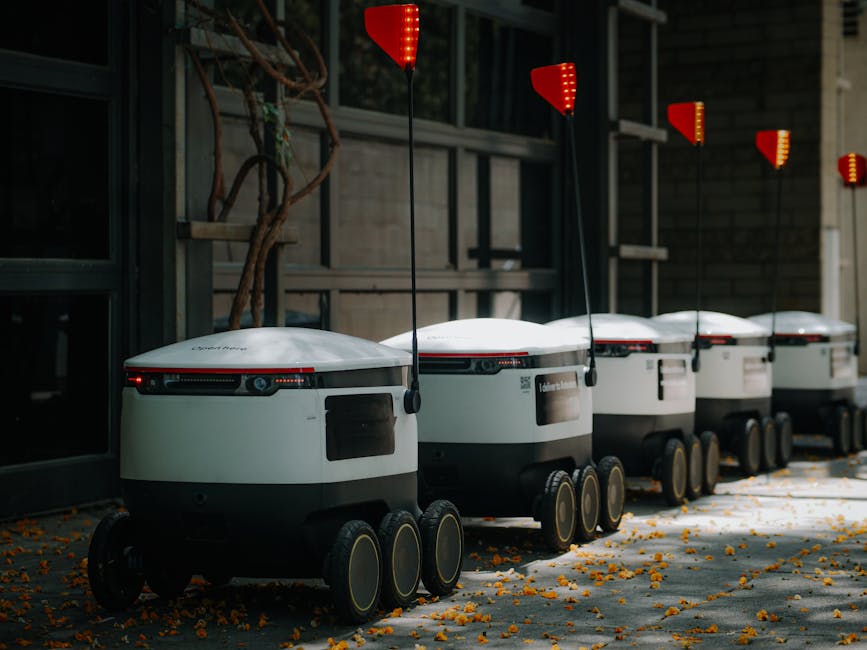
The rapid evolution of AI Fleet Management systems is setting the stage for a fundamental reimagining of how vehicles are deployed, monitored, and optimized across commercial operations. Industry analysts project that by 2029, AI-powered fleet management platforms will manage over 75% of commercial vehicle operations in developed markets, driven by regulatory pressures, economic imperatives, and technological maturation. These systems will leverage advanced machine learning algorithms, edge computing capabilities, and integrated sensor networks to create intelligent ecosystems that anticipate needs, prevent failures, and optimize performance in real-time. The transition from reactive to predictive and ultimately prescriptive fleet management represents one of the most significant operational shifts in transportation history.
Autonomous and Semi-Autonomous Vehicle Integration
One of the most transformative trends on the immediate horizon is the accelerated integration of autonomous and semi-autonomous vehicles into commercial fleets. By 2028, experts predict that Level 4 autonomous trucks will handle approximately 30% of long-haul freight operations in North America, fundamentally altering fleet composition and management requirements. AI Fleet Management platforms will need to coordinate mixed fleets containing human-driven vehicles, driver-assisted systems, and fully autonomous units, each with distinct operational parameters, regulatory requirements, and performance characteristics.
This integration will demand sophisticated AI algorithms capable of dynamic task allocation, determining in real-time whether a delivery is best suited for autonomous execution or requires human judgment. Fleet managers will rely on predictive models that assess factors including weather conditions, traffic complexity, cargo sensitivity, and regulatory restrictions to optimize vehicle deployment. The economic implications are substantial: autonomous vehicles can operate continuously with minimal downtime, potentially reducing per-mile operating costs by 40-60% for appropriate route segments while simultaneously addressing the persistent driver shortage affecting the logistics industry.
Beyond the vehicles themselves, infrastructure requirements will evolve dramatically. AI Fleet Management systems will need to integrate with smart highway networks, autonomous vehicle charging and fueling stations, and dedicated maintenance facilities equipped with specialized diagnostic tools. Organizations investing in customized AI solutions today will be better positioned to manage this complex transition, building the technical foundations necessary to coordinate heterogeneous fleets across diverse operating environments.
Predictive Maintenance and Zero-Downtime Operations
The next generation of AI Fleet Management will move beyond current predictive maintenance capabilities to achieve near-zero unplanned downtime through continuous vehicle health monitoring and prescriptive intervention strategies. Advanced sensor networks combined with machine learning models will analyze thousands of data points per second from each vehicle, detecting anomalies that precede component failures by weeks or months. By 2030, industry leaders project that AI-driven predictive maintenance will reduce unplanned vehicle downtime by 85% compared to traditional scheduled maintenance approaches.
These systems will employ digital twin technology, creating virtual replicas of each physical vehicle that simulate component wear, stress patterns, and failure probabilities under actual operating conditions. When the AI identifies an emerging issue, it will automatically schedule maintenance during optimal windows, order necessary parts, and even reroute vehicles to minimize operational disruption. Fleet Operations Optimization will reach new levels as maintenance becomes seamlessly integrated into operational planning rather than representing an interruption to service.
Continuous Learning and Adaptive Algorithms
Future AI Fleet Management platforms will implement reinforcement learning algorithms that continuously refine maintenance predictions based on actual outcomes. Each maintenance event, whether successful prevention or unexpected failure, feeds back into the system, improving accuracy across the entire fleet. This creates a compounding intelligence effect where larger fleets gain disproportionate advantages through superior data collection and model training.
Sustainability-Driven Fleet Transformation
Environmental regulations and corporate sustainability commitments will drive dramatic changes in fleet composition and management over the next five years, with AI playing a central orchestration role. By 2029, regulatory requirements in major markets will mandate that new commercial fleets reduce carbon emissions by at least 50% compared to 2025 baselines, accelerating the transition to electric, hydrogen, and hybrid powertrains. AI Fleet Management systems will become essential tools for managing the complexity of multi-fuel fleets while optimizing for both operational efficiency and environmental impact.
These platforms will incorporate sophisticated energy management algorithms that consider vehicle range, charging infrastructure availability, route topology, payload weight, and real-time electricity pricing to optimize fleet deployment. AI Sustainability Solutions will extend beyond simple fuel efficiency to encompass total lifecycle environmental impact, including manufacturing emissions, maintenance resource consumption, and end-of-life vehicle disposal. Fleet managers will have access to comprehensive sustainability dashboards that track carbon footprint, particulate emissions, noise pollution, and resource consumption across every operational dimension.
The economic case for sustainability will strengthen as AI systems identify operational synergies between environmental and financial objectives. Intelligent route optimization that minimizes fuel consumption also reduces operating costs; predictive maintenance that extends vehicle life reduces manufacturing emissions while improving return on assets. By 2030, leading organizations will view sustainability not as a compliance burden but as a source of competitive advantage, enabled by AI systems that transform environmental considerations into operational optimization opportunities.
Hyper-Personalized Customer Experience and Real-Time Adaptability
Customer expectations for delivery precision, transparency, and flexibility will reach unprecedented levels over the next three to five years, requiring AI Fleet Management systems to deliver hyper-personalized experiences at scale. Advanced platforms will integrate customer preference data, real-time traffic conditions, weather forecasts, and vehicle telemetry to provide delivery windows accurate to within 10-15 minutes, with dynamic updates as conditions change. This level of precision will become table stakes in competitive markets, particularly for last-mile delivery operations.
AI algorithms will learn individual customer preferences and behavioral patterns, optimizing delivery timing, packaging handling, and communication preferences for each interaction. When unexpected events occur—traffic accidents, weather disruptions, vehicle malfunctions—the system will instantly recalculate optimal responses, rerouting vehicles, adjusting schedules, and proactively communicating with affected customers before they recognize a problem exists. This level of responsiveness will transform fleet management from a backend operational function into a direct driver of customer satisfaction and retention.
Integration with Broader Supply Chain Ecosystems
Future AI Fleet Management platforms will function as intelligent nodes within comprehensive supply chain networks, exchanging data and coordinating operations with warehouse management systems, inventory platforms, customer relationship management tools, and supplier networks. This integration will enable true end-to-end optimization, where fleet deployment decisions consider not just transportation efficiency but warehouse capacity, inventory levels, labor availability, and demand forecasts across the entire value chain.
Advanced Cybersecurity and Resilient Operations
As AI Fleet Management systems become more interconnected and autonomous, cybersecurity will emerge as a critical operational priority. By 2028, connected fleet platforms will face sophisticated threats ranging from ransomware attacks that disable vehicle operations to data breaches targeting proprietary routing algorithms and customer information. Next-generation platforms will incorporate AI-driven security systems that continuously monitor for anomalous behavior, implement zero-trust architecture, and maintain operational continuity even under active attack.
These security systems will employ machine learning models trained to detect subtle indicators of compromise, identifying threats before they can cause operational disruption. Blockchain technology will secure critical data exchanges, creating immutable audit trails for vehicle maintenance records, driver certifications, and cargo chain-of-custody documentation. Fleet managers will have access to comprehensive security dashboards that provide real-time threat assessments and automated incident response capabilities, ensuring business continuity in an increasingly hostile cyber environment.
Workforce Transformation and Human-AI Collaboration
The evolution of AI Fleet Management will fundamentally reshape workforce requirements and job roles over the next five years. Rather than simply replacing human workers, AI systems will augment human capabilities, handling routine optimization tasks while escalating complex decisions requiring judgment, creativity, and ethical reasoning to human operators. By 2030, successful fleet managers will function more as strategic orchestrators than tactical coordinators, focusing on exception handling, stakeholder management, and long-term planning while AI manages day-to-day operations.
Organizations will need to invest significantly in workforce development, training existing employees to work effectively with AI systems while recruiting new talent with hybrid skill sets spanning transportation logistics, data science, and business strategy. The most successful implementations will view AI not as a cost-reduction tool but as a capability amplifier that allows human workers to focus on higher-value activities. This human-AI collaboration model will create more satisfying jobs while delivering superior operational outcomes.
Conclusion
The next three to five years will witness transformative changes in how organizations manage and optimize their vehicle fleets, driven by rapid advances in artificial intelligence, autonomous vehicle technology, and sustainable transportation solutions. Fleet managers who proactively embrace these trends—investing in advanced platforms, developing new capabilities, and reimagining operational models—will gain substantial competitive advantages in efficiency, sustainability, and customer satisfaction. The convergence of AI Fleet Management with broader digital transformation initiatives, particularly AI Business Process Automation strategies, will enable organizations to create integrated intelligent operations that drive value across the entire enterprise. The future of fleet management is not simply about better tools, but about fundamentally reimagining how transportation assets create value in an increasingly connected, sustainable, and customer-centric business environment.


Comments
Post a Comment